MITCHELL FRUIT GARDEN & CAFE, MITCHELL - SATURDAY 5TH SEPTEMBER
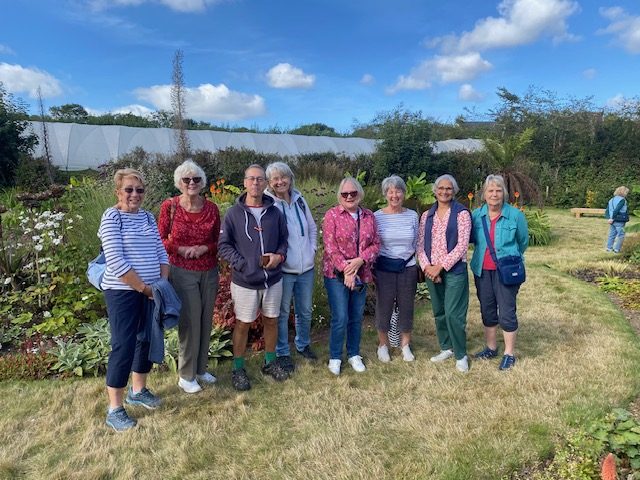
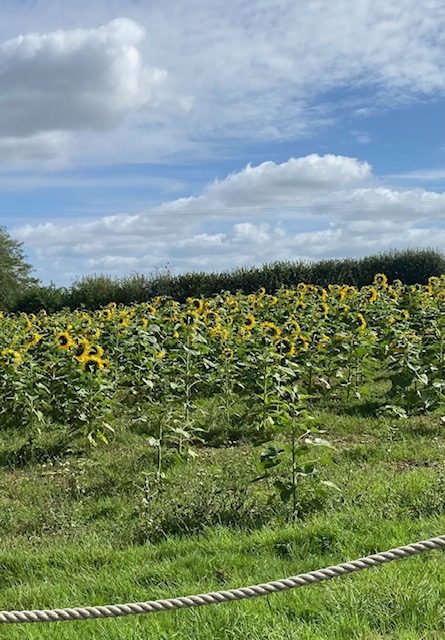
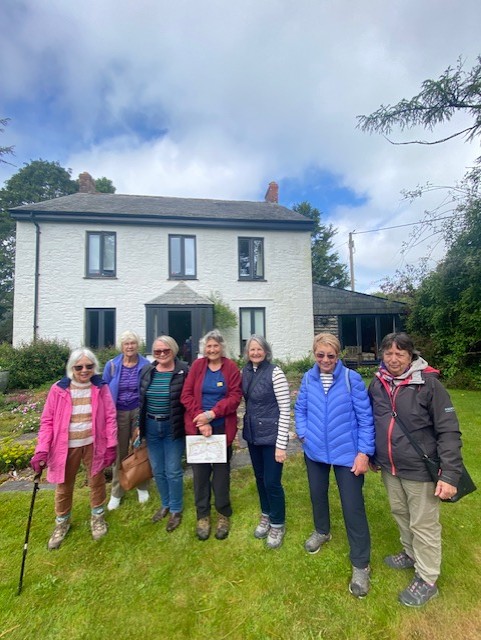
It was a lovely sunny Saturday for ten of us to meet up at Mitchell Fruit Garden. Driving in through the gates and up towards the parking area we passed several polytunnels of strawberry plants and a field full of sunflowers which looked stunning in the sunshine. We were greeted at the NGS welcome table by Sue Newton who was ‘on duty’. We have visited Sue’s Garden Cottage at Prideaux and she has also given a talk in the past.
The land at Mitchell was bought in 1976 and in the early days the farm focused on planting windbreaks and hedges and producing a variety of vegetable crops along with strawberries which soon took centre stage as the farm’s primary crop.
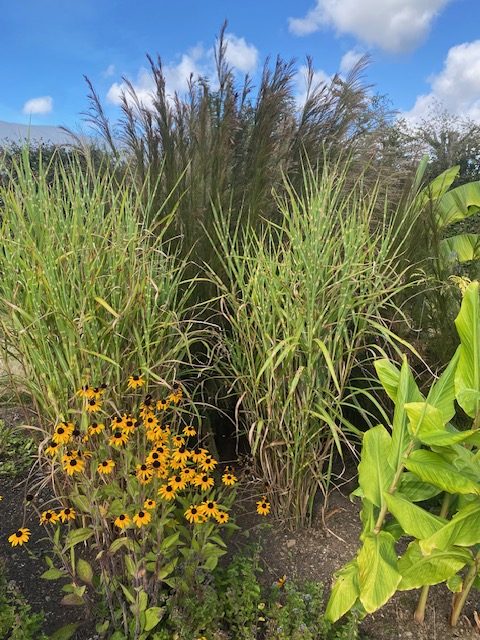
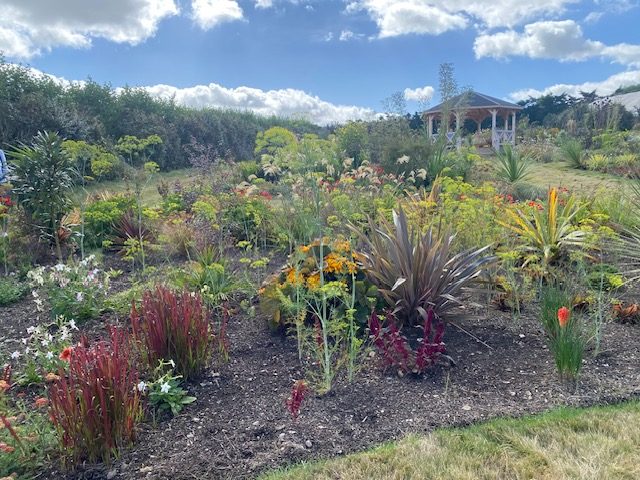
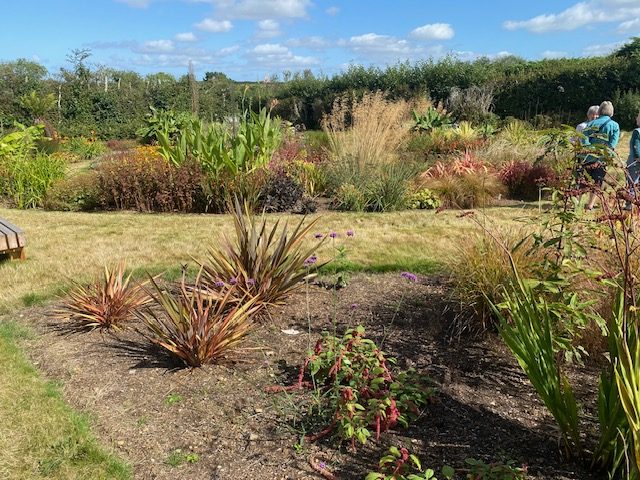
In 2022 award winning garden designer Kim Parish joined the team and in 2024 created a sub-tropical garden in a former field. We walked through a gap in the hedge into the 1-acre garden which is laid out with winding grass walkways around large flower beds containing many species of sub-tropical plants including Banana and Canna Lilly’s, alongside more well known perennials - Heleniums, Sage, Rudbeckia and Dahlia. There were also several different varieties of grasses, Miscanthus, Nepalese and Pennisetum to name a few. In the centre of the plot is a very large wooden gazebo where you can sit and enjoy a 360-degree view of the garden.
After meandering around the garden and enjoying the variety of plants and testing out the gazebo we went off to the strawberry polytunnels for the serious job of fruit picking. After this exercise some of the group rewarded themselves in the cafe for tea/coffee and cake and others with a little more time to spare enjoyed a lunch at the pub in the village.
LITTLE MERMAID, CARLYON BAY - FRIDAY 28TH AUGUST 2026
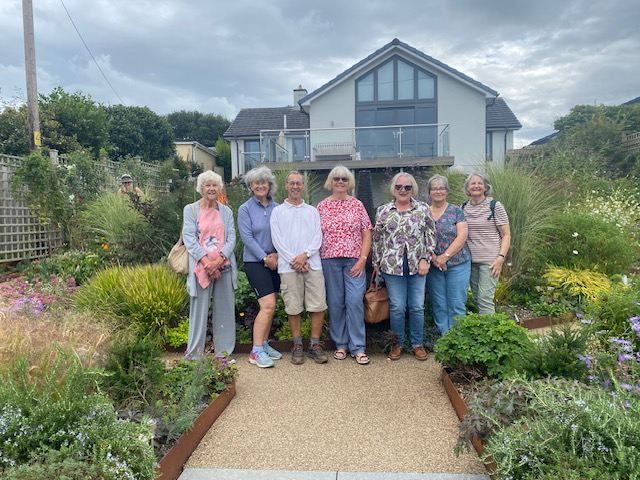
With an uncertain weather forecast eight of us met for our arranged visit to Little Mermaid, Carlyon Bay a new garden to the NGS scheme this year where we were greeted by Peter and Tricia Howard. Following their retirement from Hidden Valley Gardens and their move to Carlyon Bay they have spent the last two year’s creating a plant lovers garden giving a wonderful sea of colour.
Firstly, they employed the services of a landscaping company to come and set out the winding pathways, steps and flower beds areas to Tricia’s design. As the garden slopes down away from the bungalow pathways suitable for a wheelbarrow were a ‘must have’ for Tricia. A bespoke greenhouse was erected at the bottom of the plot with a verandah area in the middle section housing a succulent collection. In the centre of the back garden is a very special Jeremy Hastings slate water feature in the shape of a Cornish Mine chimney.

With the layout of the garden completed Tricia and Peter planted out the 100+ plants they had brought with them from the Hidden Valley Gardens including their renowned dahlias. Indeed with so many plants to view and admire it would fill a page to name them all, but the attached photo’s will give an indication. Being supporters of the Bumblebee Conservation Trust many of the plants were for pollinators.


An area of the garden has been set out as a fernery both at ground level and in hanging pots on trellis attached to the boundary fence which was very effective.

Around the garden were several pots brimming with colourful flowers.
After our very interesting walk/talk we were invited indoors for a welcome hot drink and delicious homemade cakes. The rain duly arrived but following on from our recent drought no-one was complaining!
A thoroughly enjoyable afternoon.

6 CLEASE MEADOWS, CAMELFORD - SATURDAY 18th JULY
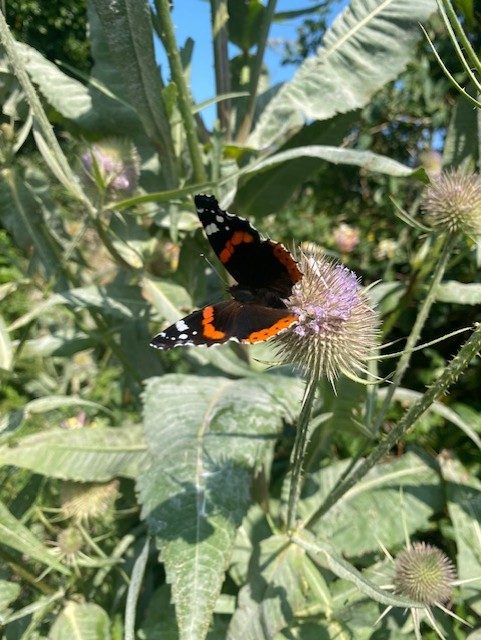
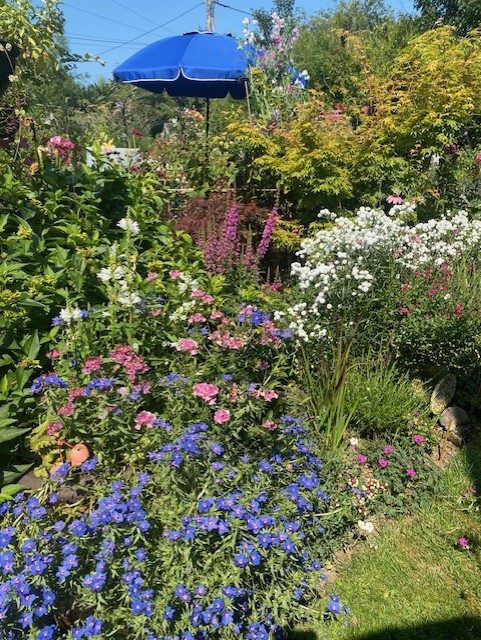
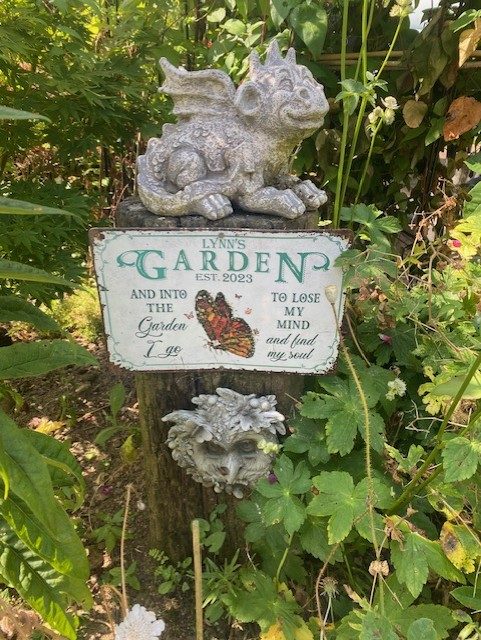
Our visit to a new garden opened for the National Garden Scheme this year by Lynn Peacock showcased what can be achieved and included in a relatively small space. Lynn started developing her garden in 2023 when it was just an overgrown patch of grass and what she has managed to achieve in the 3 years since is a real eye opener and credit to her.
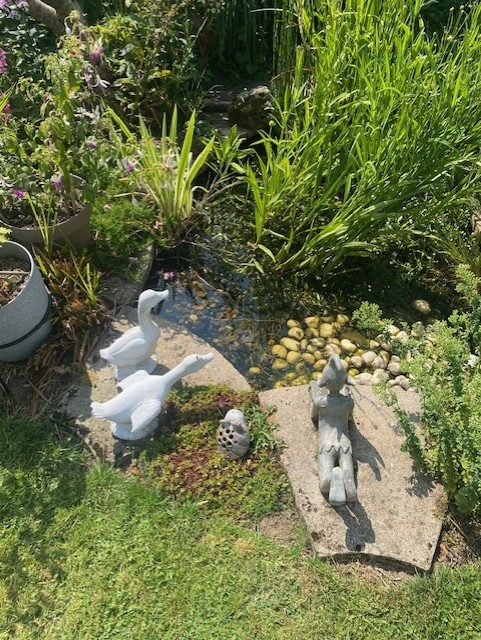
Entering the garden we were dazzled by the colourful display from the herbaceous beds, filled pots and hanging baskets. Wandering along the curved pathways we came across a small wildlife pond, very welcome to the insects and birdlife in the garden. Winding through the centre of the garden were a set of arches ready for the roses and clematis to wind their way up. Moving on towards the rear of the property was a mound with a willow wigwam providing sheltered seating. Beyond this was a small fernery and beyond that was the dead hedge screening the compost heap at the bottom of the garden. The dead hedge is a sustainable alternative to traditional fencing, providing shelter for wildlife and enriching the soil as it decays. Towards the house was a small patio seating area where you could sit and appreciate the garden. Dotted around the garden were pieces of art and stone ornaments adding interest. The colours of the plants were stunning and everything looked fresh and healthy, no mean feat in the hot weather we have been experiencing.
After this feast for the eyes we travelled to Hawksfield for some lunch and retail therapy before heading home. Another very enjoyable day.
SLIGGON FIELD, TREBETHERICK - MONDAY 29TH JUNE
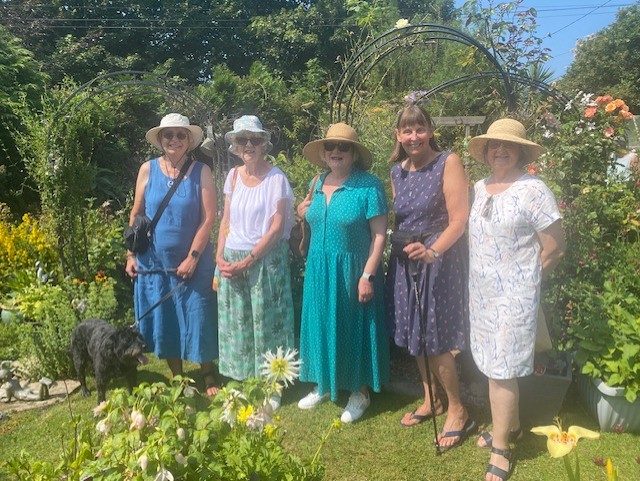
For our ‘last minute’ replacement garden visit for June six of us met up in Trebetherick to visit Sliggon Field opened for the NGS by Mr Julian Webb.
Walking down the lane our breath was taken away not only for the garden opening up before us but also by the amazing designed ‘tree house’ (the owner’s term) sitting at the top of the plot. The owner’s have been there full time for 4 years working on the garden with an extra gardener joining them for 1 day a week.
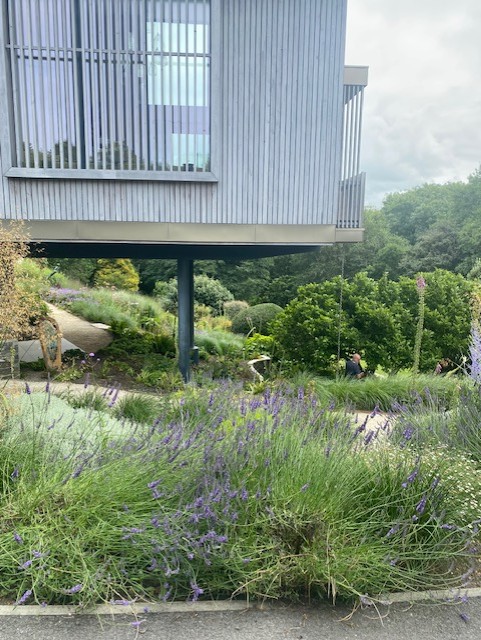
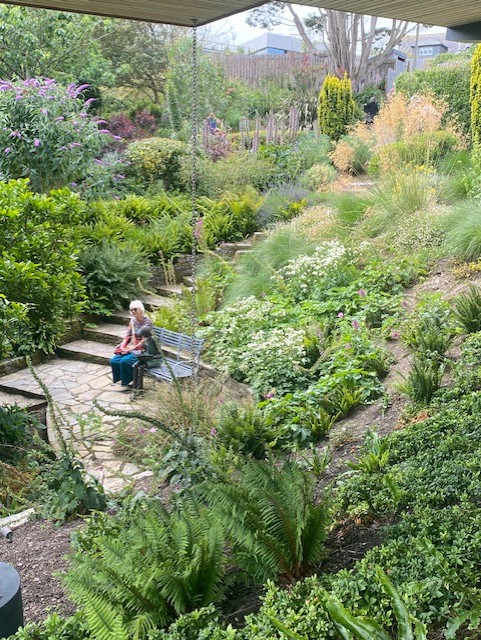
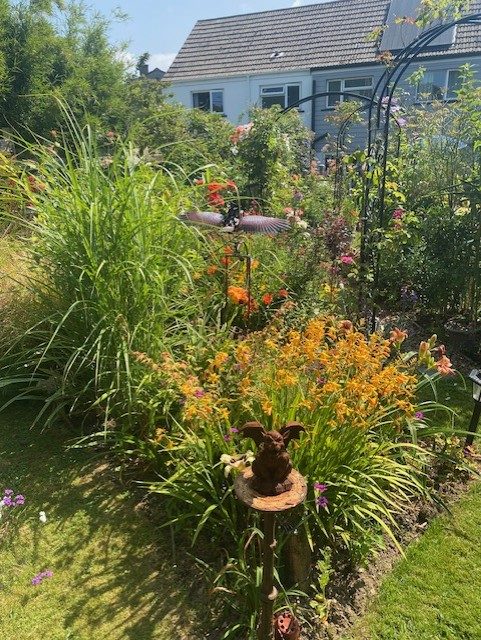
The garden is split into areas of different levels dropping away from the house connected by pathways and steps and is well protected from the weather. Under the house was a rockery area. On the higher left-hand side was the vegetable garden consisting of large round steel planters and a greenhouse. Gently sloping down towards the lawned area was a herbaceous bed full of red hot pokers, lavenders, a palm tree, waving wand, agapanthus seed heads, purple toadflax, yellow daylilly’s to name just a few.
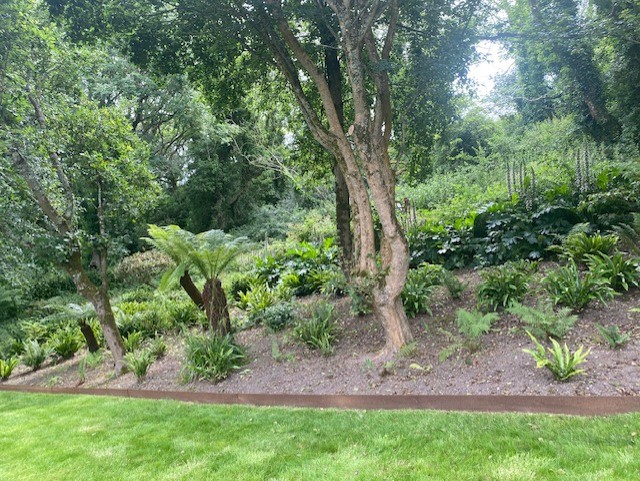
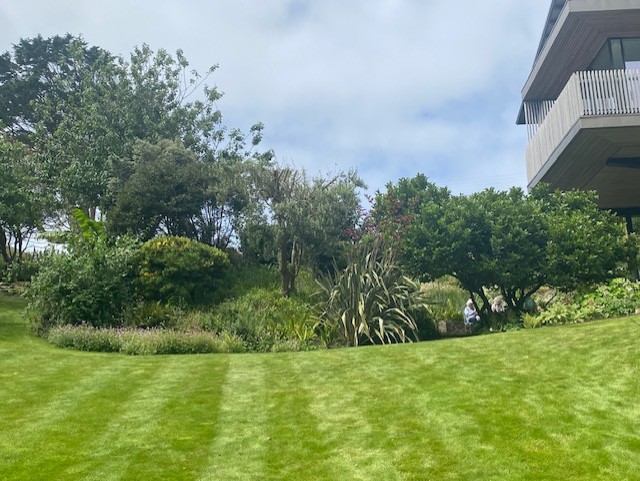
On the right hand side of the garden was a wide border laid out with tree ferns and interspersed with white hydrangea. The centre area was laid to lawn with a semi circular shaped shrubbery edged with pink geranium on the topside towards the house, to the side was a seating area with a very novel seat for 2 with the statue of a young girl reading a book in between the seats, very much admired and tested out by some members of the group!
The lower part of the garden has been left as the wild area with wood ferns and compost area screened by hedging.
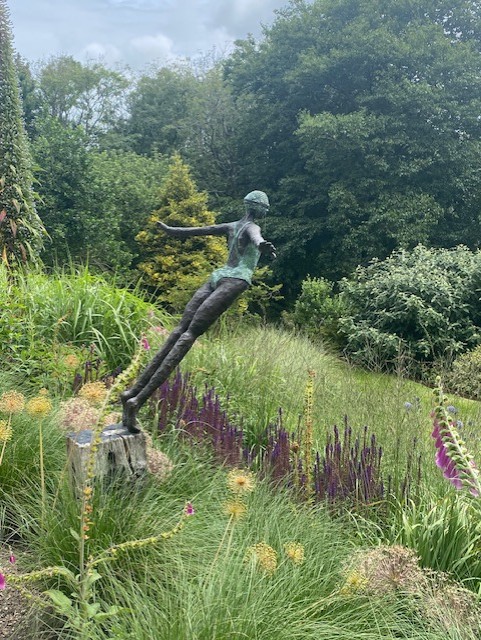
Throughout the garden are sculptures and pieces of artwork created by Ms Webb. The piece that stood out particularly to us was of a young girl diving albeit to a bird bath.
We all thought this was an extra special garden and my report probably does not do it the justice it deserves.
A unanimous decision was taken by the group to call in at Trelawney Garden Centre for our refreshments and social time before heading home.
TREVINA HOUSE, ST NEOT - THURSDAY 21st MAY
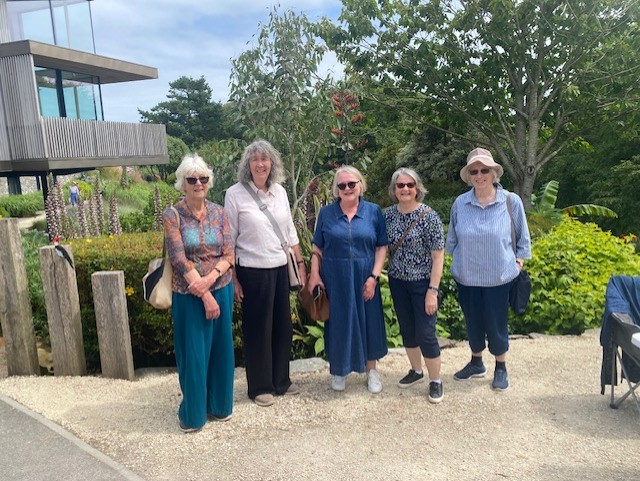
After a very misty start to the day it began to brighten up into sunshine en-route to the garden. Six of us met up at Trevina House set in the picturesque countryside not far from Colliford Lake. We were warmly welcomed by Sue the owner and was introduced to two young volunteer gardeners from the WWOOF International organisation.
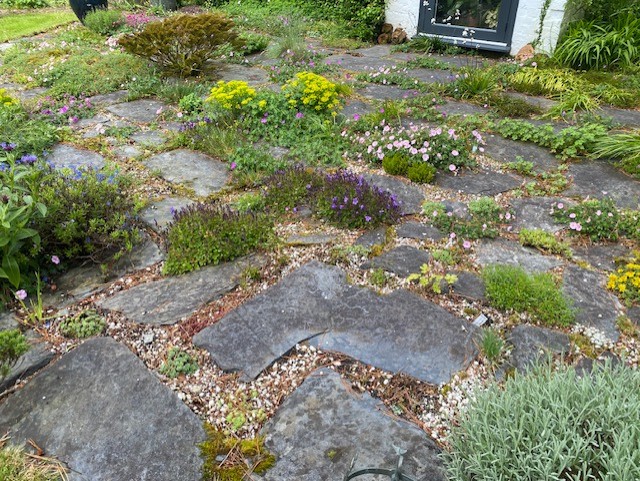
Sue gave us a very informative walk and talk explaining how the garden has evolved from a Victorian garden into the cottage garden we saw today. When they moved into the house the front garden sloped away downwards, this area was levelled and an alpine patio is now in situ next to the house with a variety of plants between the flagstones.
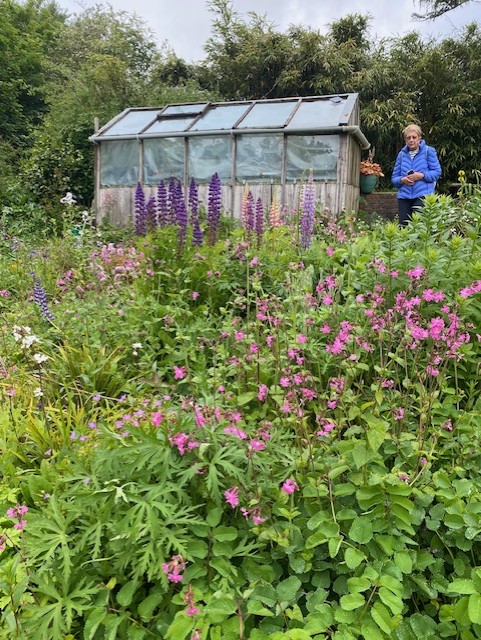
The plants in this area of the garden are many and varied and are allowed to grow and seed without too much intervention. Weeding is not a first priority and it all works beautifully. There were Iris, Lupins, Azaleas providing a good show of colour and an abundance of other plants far too many to list here. Variegated Honesty plants were dotted around and Sue very kindly gave out seed pods to interested parties.
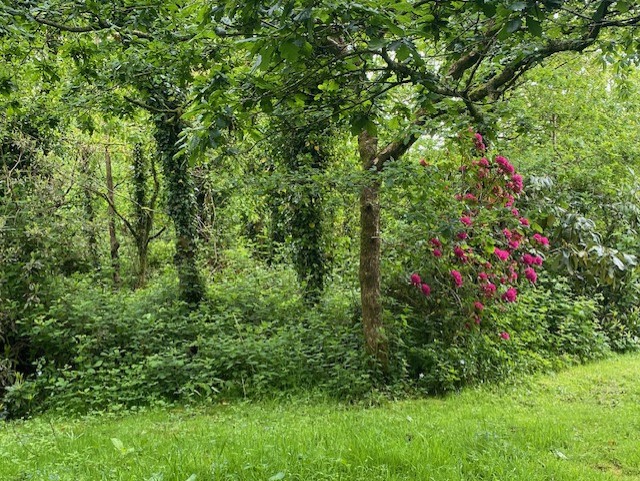
We walked on into the rewilded woodland area where clearing work of trees has been undertaken following on from the storms earlier this year, sadly many trees came down. New planting schemes are underway, much to the delight of the deer and rabbits! Due to the varied habitats around the garden there is a wonderful array of birdlife to enjoy.
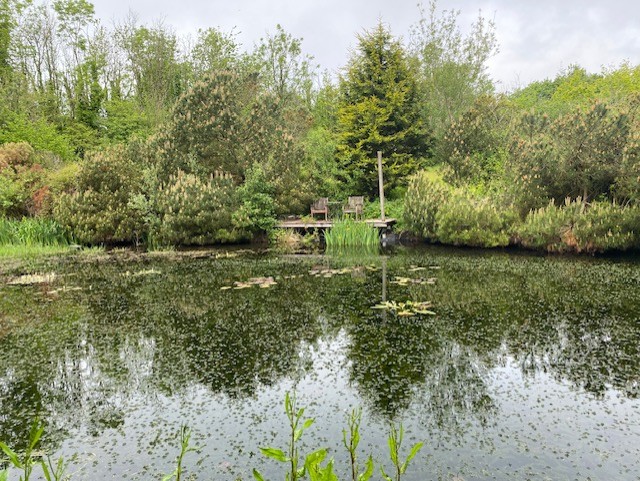
Walking on again through a hydrangea pathway with the flower heads just forming we came to the spring fed trout pond, a very tranquil spot. The bog area has been planted with bullrushes, iris, giant hostas and Gunnera with trees and shrubs all around.
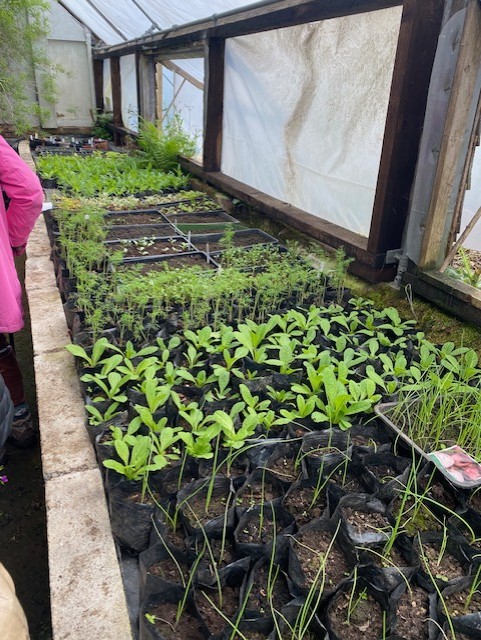
Next it was the kitchen garden and polytunnels. In the first one we were shown the seedlings and young plants being prepared for planting out, while overhead there was a grape vine with plenty of grapes forming. Two further polytunnels, one being emptied of the last crops and the next newly built and being prepared for plants. The kitchen garden has seen a lot of work with rows of new vegetable plants having been planted up with roses and poppies alongside the pathway. The chicken run was covered with clematis to give the birds shade. A lot of work has taken place to keep the deer out which is an ongoing job.
Back at the house we were treated to a lunch of homemade soup, apple juice made from apples from the organic orchard and mouth watering cakes, besides our teas/coffee. During lunch we chatted to the two young gardener’s and Sue’s husband Kevin.
After 30 years of planning and hard work Sue and Kevin’s enthusiasm has not diminished and there are several plans in action for what to do next. Sue’s philosophy is not to be over worried about weeding, and in this garden that system really works.
A thoroughly enjoyable visit.
REPORT ON VISIT TO SCORRIER HOUSE GARDENS - MONDAY 20th APRIL
Our garden visit in April was to Scorrier House Gardens. Nine members took advantage of a privileged visit as the house is now used as a wedding venue, also for music festivals and other corporate events, with many thanks to Barbara for contacting a relative who works there for us.
Although a slightly chilly day the weather was dry and bright (at last!). We were greeted by ‘Ollie’ the owner’s son who gave us a talk informing us that the house was built in 1778 by John Williams the 3rd.
Over generations the family made their fortune in tin mining and the house was extended and more heathland acquired which was cleared for gardens around the house and new pastures. However, a fire caused considerable damage to the extension and this was rebuilt again in 1908.
The gardens are notable due to the influence of William Lobb, a famous Victorian nurseryman, botanist and plant hunter, who worked for the Williams family.
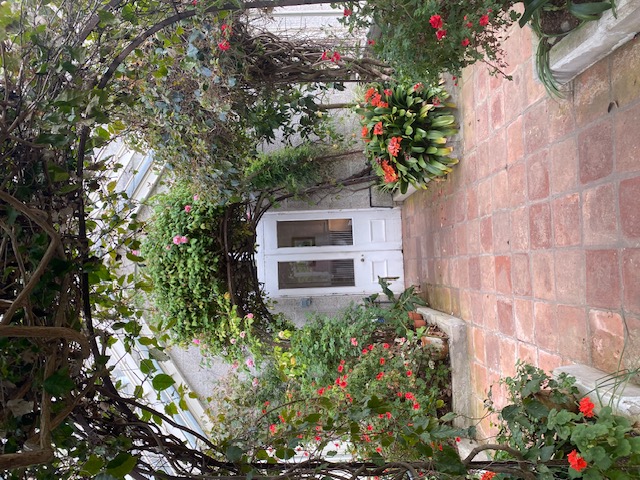
From the main entrance hall Ollie led us out to the gardens for our walk through a conservatory which contained a rose arbour, lemon trees and bright orange Natal (or Bush) Lillies.
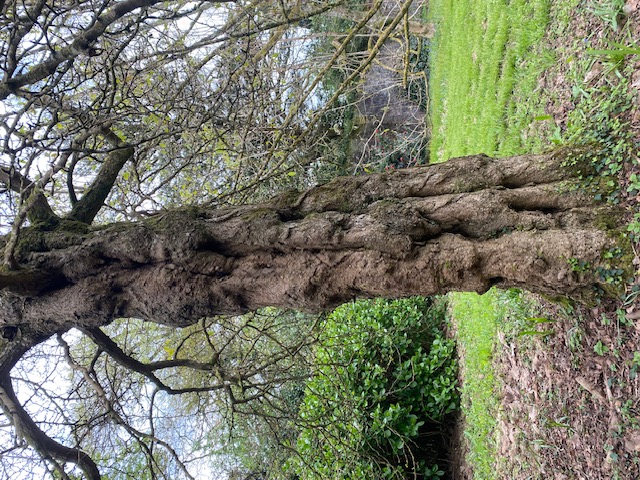
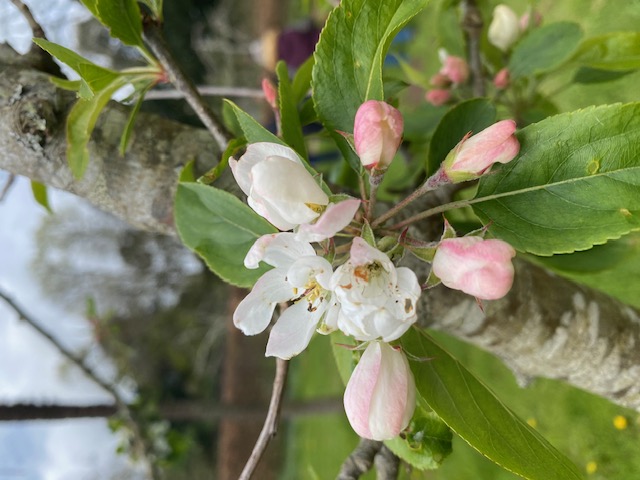
Past the swimming pool and sun house our attention was drawn to part of a Victorian wall which at one time housed a leanto greenhouse where pineapples were grown. Walking on we entered the old dairy garden where there were old fruit trees. A small crab apple tree had several very pretty white/pink blossoms. Walking on around the garden there were several Myrtle trees with their unusual cinnamon coloured bark, apparently these trees seed very easily everywhere. A very old large Ginka tree had an amazing gnarled trunk almost as if it had been molten which had run down the trunk.
Moving on into the folly garden there was a seating area made out of huge pieces of white stone brought in from the mines. This area had seen a lot of damage from the recent storms and several trees had been lost and are in the process of being cleared away. Sadly a rose and wisteria arbour had also been completely destroyed, although there are plans to install a new one at some point. Over 100 trees in total were lost from the estate.
We carried on with our walk passing many variety of Camelia in flower and came across a folly which looked like a little cottage. This is in disrepair at present but there are plans to restore it in the future.
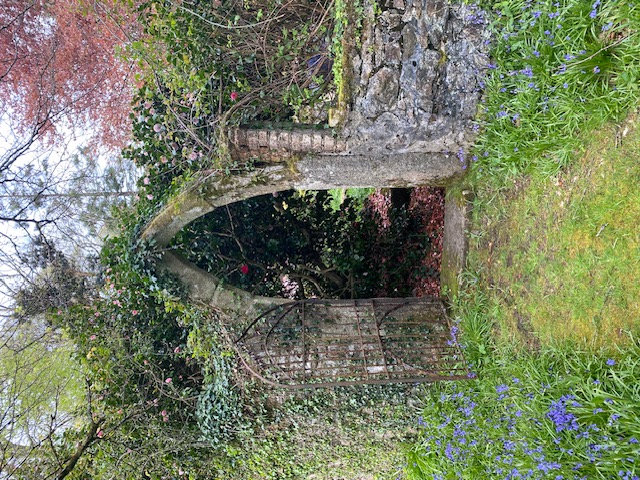
Through another archway which came from the old St Day Church led us past a Celtic cross marker from the same Church. Nearby was another taller cross although the original site for this cross is unknown.
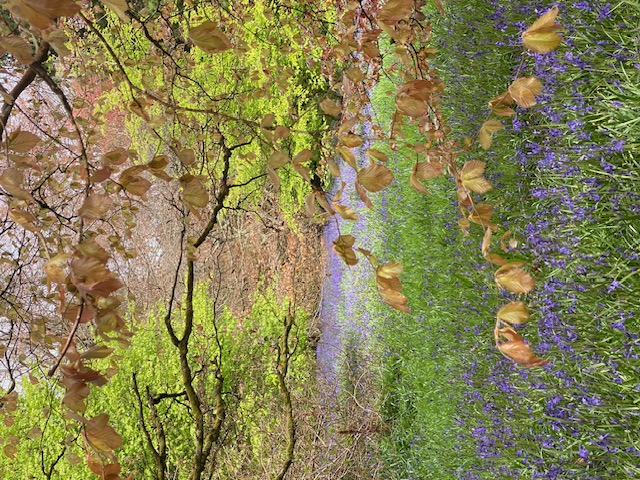
The fresh colours of the Azaleas, Bluebells, Rhododendrons and the new leaves appearing on the trees and shrubs gave a tapestry of colour in this area of the garden.
Ollie then led us back to the house where a very welcome hot drink and delicious cake awaited us, the perfect end to our very enjoyable visit.
Report on garden visit of Friday 13th March 2026
Dr Frances Howard’s garden in Bere Alston
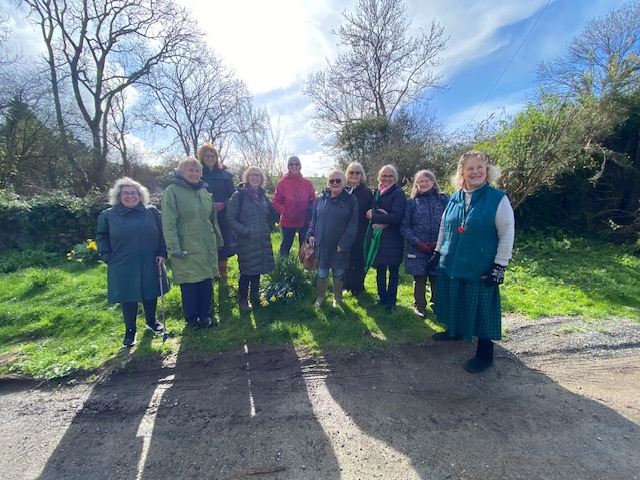
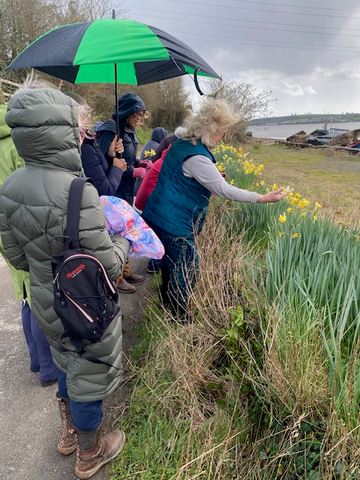
I had attended Frances’ talk on historic daffodils to the Whitecross and District Gardening Club last September and took her up on her offer to bring a group to visit her garden and walk along the lanes bordering the river Tamar to spot many varieties of historic (and more modern) varieties of daffodils.
The weather forecast was not promising so Frances and I agreed that the visit would start with lunch at 12.00pm at the Yard Café Weir Quay where she would give her talk in the comfort of a warm room. Weather allowing, we would then see the daffodils in situ.
What a fantastic day we had! Eight-members of the u3a group along with 2 friends and members of the Whitecross and District Gardening Club made their way to Weir Quay and had a lovely lunch cooked and served by Christine whose homemade ice-creams are truly delicious!
Frances’ interest in daffodils started 20 years ago when she moved down to Weir Cottage and was given a several bulbs by Lady Boyd who lived in Ince Castle. Her knowledge of the historical daffodils, especially those of the Tamar Valley hedges is second to none. Frances’ talk was very informative and entertaining and there is no way that I can transmit all her knowledge in this report!
Tamar daffodils, as they were so early were sent to Covent Garden, London from 1865 via the river and rail. The railway came through Bere Alston in 1980, so the trade expanded rapidly.
In the 2nd World War, the daffodils had to be replaced by vegetables, so were lifted and thrown into the hedgerows where the grow today.
The historical daffodils in the Tamar Valley hedges are:
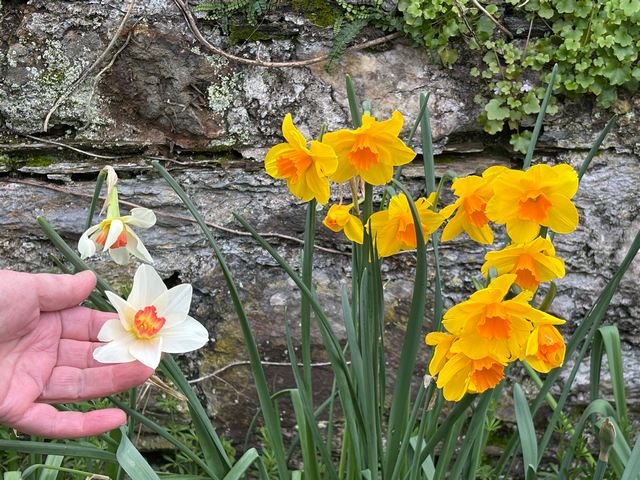
Big yellow trumpets: Maximus superbus, King Alfred and Emperor
Frances had invited us to bring daffodils from home if we wanted her help to identify them. I was delighted to hear that I indeed had a clump of “Maximus superbus” in my garden in Penpol (The bungalow was built on the site of an orchard), a variety growing in England before 1576 so seen by Sir Frances Drake (The variety, not mine!).
Medium yellow trumpets: Princeps, Sir Watkin and Lent Lilly
There is a house in Penpoll with a field and orchard covered in “Lent Lilly”, a spectacular sight this time of the year. The hedges bordering the field and orchard are also full of those little native daffodils which grew wild before 1570. This was the “host of golden daffodils” that Wordsworth wrote about.
Bi-colours: Empress, Fortune and Bath’s Flame
Post 1st World War varieties like Fortune have thick overlapping petals whereas pre 1st World War varieties have thin and twisted petals. This cascade of “Fortune” can be seen outside the Boatyard on Weir Quay.
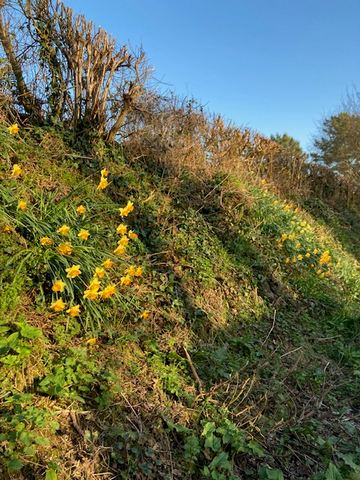
Doubles: Van Sion; Eggs and Yolks and Tamar Double White
“Tamar Double White” was found in Clamoak Farm hedge by Septimus Jackson in the 1880s. It is a very strong scented and long vase life variety so sent up to London in special blue tissue lined boxes. It is getting very rare. To grow, it needs to be planted very deep. It flowers very late, in May.
Whites: Ice Lollies, Actaea and Pheasants Eye.
“Pheasants Eye” dates from pre 1900 and its snow-white petals are swept back. It is the father of most flat white narcissi with reflexed petals.
We are thinking of planning a visit to Frances' garden in the Autumn as her garden is full of colours then.